Signs Your Yard Has a Drainage Problem
Drainage problems can be frustrating for homeowners. A yard that holds water can damage grass, ruin landscape beds, create muddy areas, and make outdoor spaces less usable. In Michigan, drainage issues often become more noticeable after heavy rain, spring snowmelt, or repeated storms.
The sooner you recognize the signs of poor drainage, the easier it is to protect your landscaping and property.
Standing Water After Rain
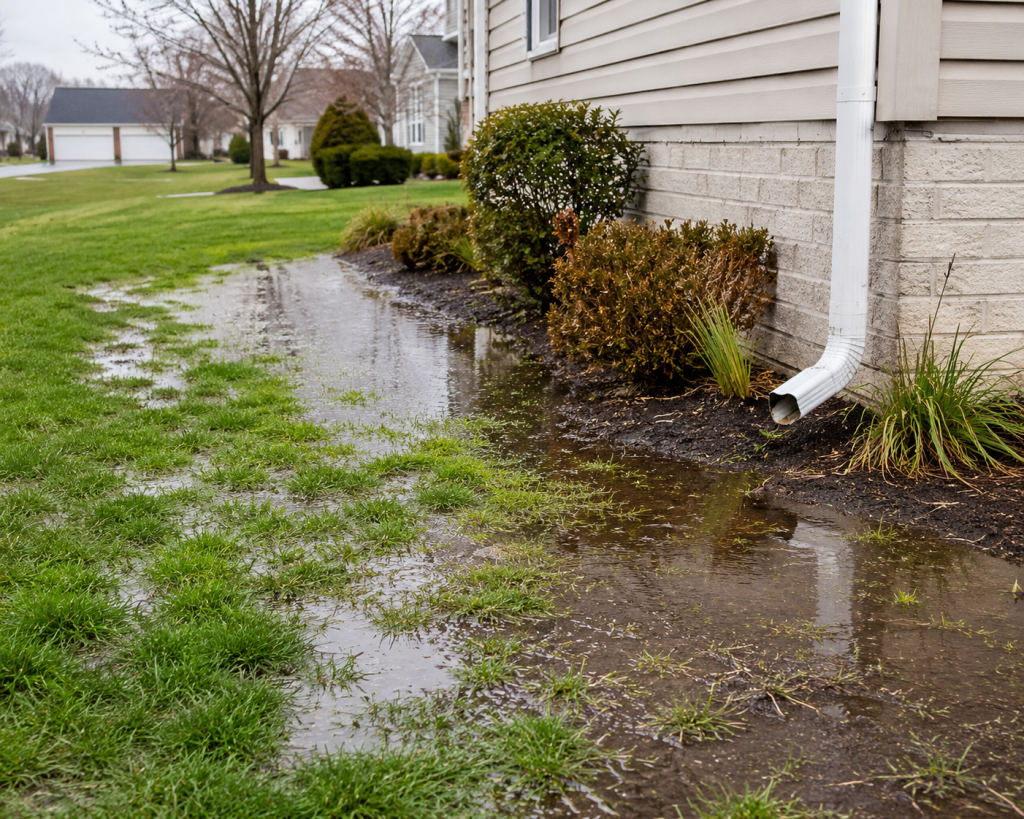
One of the clearest signs of a drainage problem is standing water that remains long after rainfall. Small puddles immediately after a storm may be normal, but water that sits for hours or days can indicate a problem.
Standing water can suffocate grass roots, attract pests, and make the lawn difficult to maintain.
Soggy or Spongy Grass
If parts of your lawn feel soft, wet, or spongy underfoot, water may not be draining properly. These areas may stay damp even when the rest of the yard is dry.
Soggy grass can lead to thinning turf, muddy patches, and mower damage. Over time, the area may become worse if the underlying drainage issue is not corrected.
Washed-Out Mulch or Soil
If mulch keeps washing out of your flower beds, water is likely moving through the area too aggressively. This can happen when beds are on a slope or when downspouts and surface water drain into the landscape.
Washed-out mulch is not just a cosmetic issue. It can expose roots, erode soil, and damage plants.
Erosion Around the Yard
Erosion happens when moving water carries soil away. You may notice channels forming in the lawn, exposed roots, uneven ground, or soil collecting in unwanted areas.
Erosion can weaken landscape beds, affect patios or walkways, and make the property harder to maintain.
Water Near the Foundation
Water collecting near the foundation is a serious warning sign. The ground around your home should slope away from the structure.
If water pools near basement walls, foundation plantings, or low areas around the house, grading may need to be corrected. This issue should be addressed before it leads to larger moisture concerns.
Plants That Keep Struggling
If certain plants repeatedly decline, yellow, rot, or fail to thrive, poor drainage may be part of the issue. Some plants do not tolerate wet roots.
Before replacing struggling plants, consider whether the location is too wet or poorly drained. The right drainage solution can help future plantings succeed.
Moss, Weeds, or Bare Spots
Wet lawn areas often encourage moss and weeds while making it harder for healthy grass to grow. If you notice bare patches, mossy areas, or weed growth in damp sections of the yard, drainage may be affecting the turf.
Healthy grass needs the right balance of water, air, sunlight, and soil conditions.
Patio or Walkway Water Issues
Water should not collect on patios, walkways, or steps. If hardscape areas hold water or direct runoff toward the home, the slope or drainage may be incorrect.
This can lead to slippery surfaces, shifting pavers, and long-term hardscape damage.
Andy’s Landscape Services provides hardscaping and build services that account for drainage and proper installation.
Drainage Problems Usually Get Worse
Ignoring drainage problems rarely makes them go away. Over time, water can damage grass, beds, patios, and grading. A professional evaluation can help identify the source of the issue and recommend a solution.
Protect Your Yard With Proper Drainage
A yard should be beautiful and usable, not wet, muddy, or difficult to maintain. If you see standing water, erosion, soggy grass, or washed-out beds, it may be time to address drainage.
Contact Andy’s Landscape Services to discuss grading and drainage solutions for your Michigan property.