Landscape Lighting Cost in Oakland County: What to Expect
Landscape lighting cost in Oakland County depends on the number and quality of fixtures, the size of the property, wiring distances, controls, access, and the design effect you want to create. A few path lights serve a different purpose than a complete system for patios, steps, trees, architecture, and outdoor entertaining.
A professional proposal should begin with how the property is used after dark. From there, the designer can select fixture types, positions, beam spreads, brightness, and control options that support safety and atmosphere without overlighting the yard.
What affects landscape lighting cost in Oakland County?
- Fixture count: Larger properties and layered designs require more fixtures.
- Fixture construction: Materials, optics, finishes, and weather resistance influence quality and longevity.
- Transformer and controls: System capacity, timers, smart controls, and zoning affect the equipment plan.
- Wiring distance: Long runs and separate landscape areas require additional cable and installation time.
- Access: Established planting, hardscapes, walls, and grade changes can make routing more complex.
- Design detail: Steps, specimen trees, water features, outdoor kitchens, and architecture need carefully selected techniques.
Because each property differs, an on-site design and assessment provide a more useful scope than a simple fixture count.
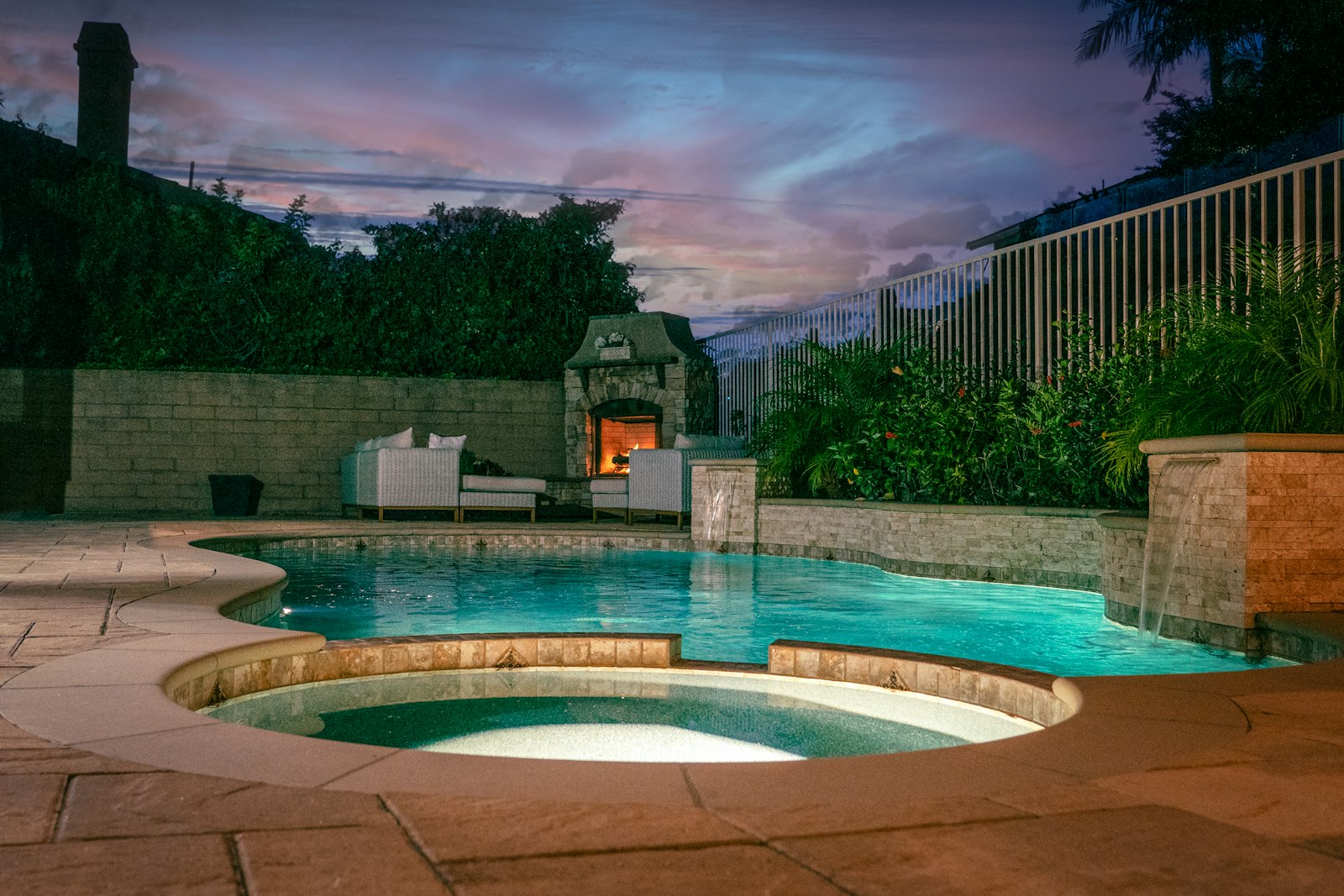
Why professional lighting design matters
More light does not automatically create a better result. Excessive brightness, glare, repeated fixture spacing, and poorly aimed beams can flatten the landscape and distract from the home’s architecture.
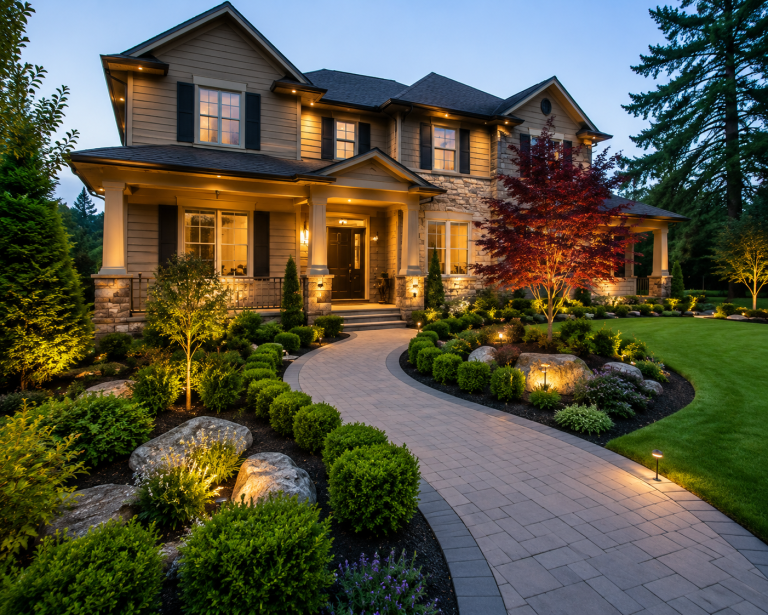
A layered plan may combine path lighting, step lighting, uplighting, downlighting, wall washing, and focused accents. Each technique has a job. Together, they create depth, support movement, and extend the use of outdoor living areas.
Should lighting be installed with a landscape renovation?
Whenever possible, plan lighting alongside your landscape and hardscape. Coordinate conduit, sleeves, wire routes, transformer locations, and fixture positions before finishing patios, walls, and planting beds.
This approach ensures your lighting enhances the overall landscape design. You can design specimen trees, textured walls, water features, or outdoor kitchens to showcase stunning views both day and night.
What should a landscape lighting proposal include?
The proposal should identify fixture types or quality level, approximate locations, transformer capacity, controls, installation method, and any restoration work. It should also explain whether the system can support future expansion.
Ask how the installer will avoid glare, protect wiring, manage voltage across longer runs, and provide access for future service. You can also review Andy’s outdoor living portfolio for examples of lighting integrated with complete landscapes.
Plan for adjustment and maintenance
Landscapes grow and change over time. As plants mature, you may need to clean, aim, or reposition fixtures. Inspect connections and controls whenever a light stops working or the system behaves inconsistently.
A flexible design makes these adjustments simple. It also lets you add future zones or fixtures without rebuilding the entire system.
Frequently asked questions
Can lighting be added to an existing landscape?
Yes. A professional can evaluate access, routing, existing hardscapes, planting, and electrical capacity before developing the plan.
How many fixtures does a property need?
There is no universal number. The correct count depends on the areas being used, the features being highlighted, fixture output, spacing, and the desired effect.
Can landscape lighting be expanded later?
Often, yes. The original transformer, wire layout, and controls should be planned with future capacity in mind.
For a landscape lighting consultation in Oakland County, call Andy’s Landscape Services at (248) 837-0683 or schedule a consultation.