Brick Paver Patio Maintenance in Birmingham, MI: 7 Tips Before Winter Hits
Brick paver patio maintenance in Birmingham, MI comes down to what you do in September and October, not what you do in April. Michigan runs through dozens of freeze-thaw cycles each winter, and every one of them works on the weakest point in your hardscape.
Seven tasks make the difference. None of them take a full weekend.
1. Clear the surface before the leaves pile up
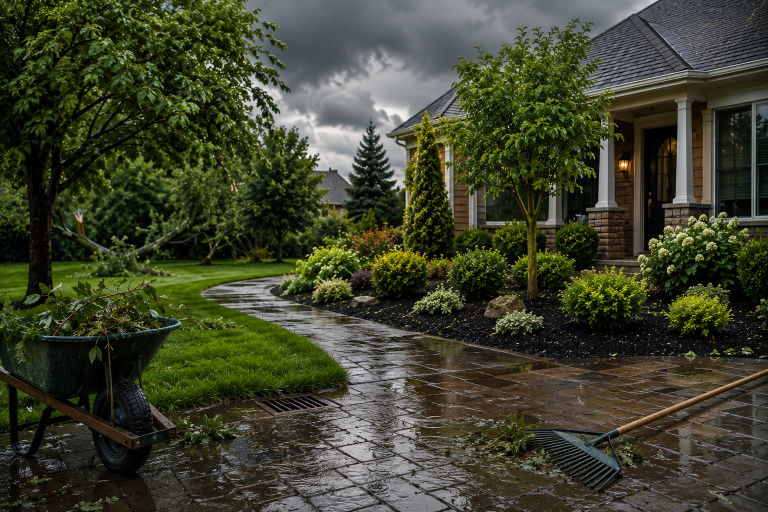
Wet leaves left on pavers for a month leave tannin stains that no pressure washer removes. They also trap moisture against the surface all winter.
Sweep the patio, then rinse it with a garden hose and a stiff brush. Skip the pressure washer unless you know the joint sand is fresh, because high pressure blasts it straight out.
2. Pull weeds and moss out of the joints
Roots in a paver joint act like a wedge every time the ground freezes. A weed you ignore in September becomes a lifted paver by March.
Pull them by hand or with a joint knife so you get the root. Moss usually means the area stays shaded and damp, which is a drainage conversation, not a weeding one.
3. Top off the polymeric joint sand
Joint sand is what keeps pavers locked together, and it washes out a little every season. Run a finger down a joint. If it sits more than an eighth of an inch below the paver surface, refill it.
Sweep polymeric sand into the joints, remove every grain from the paver faces, then mist it per the bag directions. Do this on a dry day with no rain in the forecast for 24 hours.
4. Check the edge restraints
Almost every spreading patio starts with a failed edge. The plastic or aluminum restraint along the perimeter is what stops the outer row from drifting.
Walk the perimeter and look for restraint that has lifted, spikes that have backed out, or an outside row that no longer sits tight against its neighbor. Fixing a few feet of edging now is a fraction of the cost of relaying a section later.
5. Find the low spots while it is still raining
Water that sits on a paver surface in November becomes ice that heaves the base in January. Fall rain is the easiest diagnostic tool you will get all year.
Go out during the next steady rain and mark any puddle wider than a dinner plate. Recurring low spots usually mean the base has settled or the patio never had enough pitch away from the house.
6. Seal only if the patio is clean and dry
A good sealer resists salt, oil, and staining, but sealing dirty or damp pavers traps the problem underneath. The result is a cloudy white haze that has to be stripped off.
- Wait at least 24 hours after cleaning, longer if the weather is humid
- Temperature should hold above 50 degrees for the full cure window
- Frequency is roughly every three to five years, not annually
New pavers should weather a full season before their first coat.
7. Put the rock salt away
Sodium chloride is the fastest way to ruin a paver patio in Michigan. It pits the surface, accelerates spalling, and kills the plantings along the edges.
Use calcium magnesium acetate or plain sand for traction instead. A plastic shovel and a little patience beat any de-icer for protecting the surface.
When the patio needs more than maintenance
Sunken sections, a wavy surface, or joints that will not stay full are base problems. Sand and sealer will not fix them, and another winter usually makes the repair larger.
We handle paver repair, releveling, and new installation as part of our hardscaping services for homeowners in Birmingham, Bloomfield Hills, Royal Oak, and Troy. Seasonal cleanups and patio care fall under landscape maintenance, and our portfolio shows how these projects come together.
Call (248) 837-0683 or contact us to have your patio looked at before the first freeze.