What Is the Best Drainage Solution for a Backyard with Heavy Clay Soil?
Choosing clay soil drainage solutions requires attention to grading, water sources and reliable outlets. Many Southeast Michigan yards contain clay-rich soil that holds water longer than sandy soils. After rainfall, water can remain near the surface, suffocate lawn roots and make a backyard difficult to use. The solution is not always to install a pipe. A successful drainage plan starts with elevations, water sources and the soil’s ability to absorb or carry moisture. Understanding the options helps homeowners invest in a fix that suits the property.
Why clay changes the drainage equation
Clay particles are small and closely packed, so water generally moves through dense clay more slowly than through coarse, well-structured soils. Compaction from construction equipment can worsen the issue. If the property sits in a natural low area, adding topsoil may simply move the puddle. Start by looking at how surface runoff enters the yard and whether the ground remains wet after other nearby areas dry. Soil behavior is one factor, but slope and outlet availability can be just as important.
Correct surface grading first
A positive slope away from foundations and thoughtful low-point shaping can often reduce surface ponding. Depending on the site, a broad shallow swale can guide water toward a legitimate collection point without looking like a ditch. Regrading may require removing sod, moving material and restoring plantings. It must respect fences, property lines, patios and walkways. A designer should demonstrate where the water will travel after construction rather than offering an undefined promise to make the yard drain.
Consider catch basins and drain lines carefully
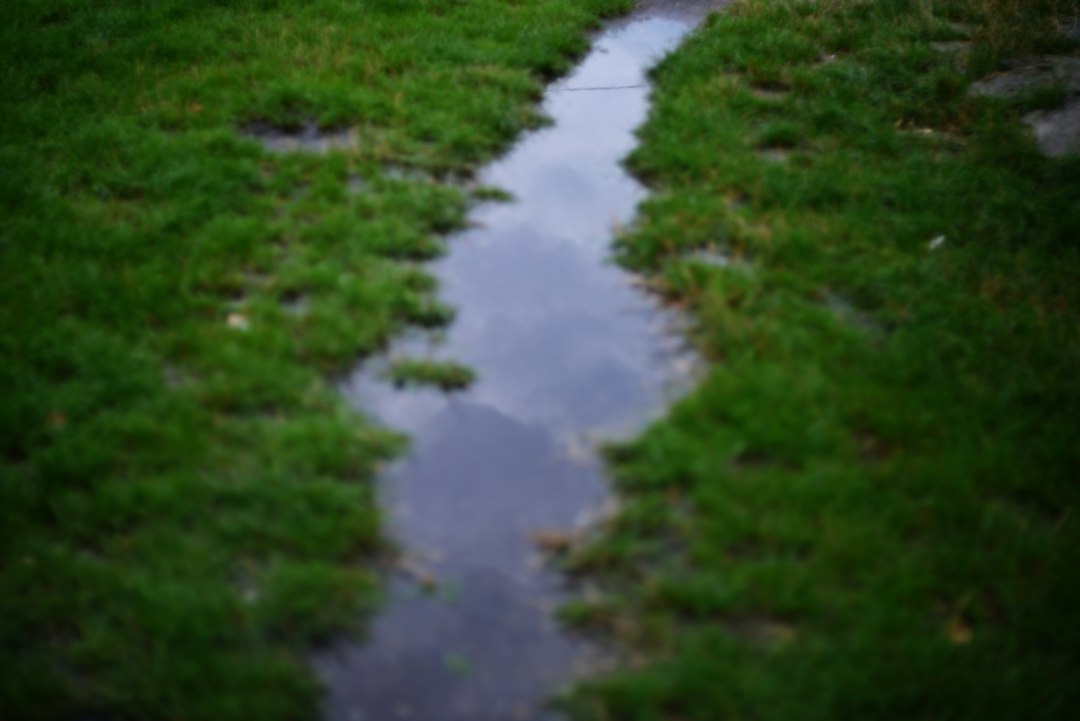
A catch basin can collect surface water at a low point and convey it through solid pipe to an approved discharge location. French drains are more often associated with subsurface water and must be designed with suitable soil and an outlet. In dense clay, water may reach perforated systems slowly. A drain that empties into saturated soil without an effective outlet can remain full. Local rules and stormwater connections may affect what’s permitted, so ask about routing and approvals before excavation.
Improve growing conditions without overselling amendments
Adding compost to appropriate planting beds can help improve soil structure over time, but it is not a substitute for correcting major runoff or grade problems. Avoid mixing a little sand into heavy clay and expecting instant drainage; the result can remain compacted. Aeration may support lawn health where compaction is part of the problem, though it does not eliminate persistent flooding. Choose plants that suit the actual moisture conditions, especially around low garden beds.
Plan for snowmelt and extreme rainfall
Michigan backyards must manage spring thaw as well as summer storms. A partially frozen surface can shed water differently from dry soil. Downspouts, sump outlets and neighboring grades may add water to the site. Leaf-filled basin grates and blocked outlets can undermine an otherwise sound system. Ask the contractor how the proposed solution will be maintained and whether ice could form at the outlet. Drainage design should also protect existing trees and avoid concentrating runoff against hardscape.
Get a site-specific drainage plan
A useful assessment identifies low elevations, existing discharge points, soil conditions, utilities and the surfaces that will be disturbed. Request a clear scope including any regrading, pipe types, basin locations and lawn restoration. Andy’s guide to drainage solutions for standing water explains related options. Whether the answer is grading, a collection system or both, the goal is predictable water movement rather than temporarily hiding a puddle.
Additional planning tips for Michigan homeowners
Homeowners can help diagnose clay-soil problems by recording three simple observations after a storm: where water first gathers, whether it moves toward or away from the house, and how long each wet area remains. Compare those notes with downspout locations and nearby hardscape grades. If a proposed solution includes a pipe, insist on a clear diagram of its destination. A buried drain with no reliable outlet is not a complete plan, regardless of how neatly the lawn looks afterward.
Discuss your project with Andy’s Landscape Services
Every property is different, and a thoughtful site assessment helps you choose the scope and materials that make sense. Describe your goals, concerns and budget so our team can recommend practical next steps.