Fall Drainage Problems Michigan Homeowners Should Fix Before Winter
Fall drainage problems Michigan homeowners notice should be evaluated before the ground freezes. Standing water, eroded beds and runoff toward the house can damage lawns, stress plants and create icy areas when temperatures drop.
Fall rain often exposes issues that were less obvious during summer. Southeast Michigan’s clay-heavy soils absorb water slowly, and compacted areas may shed water instead of letting it soak into the ground.
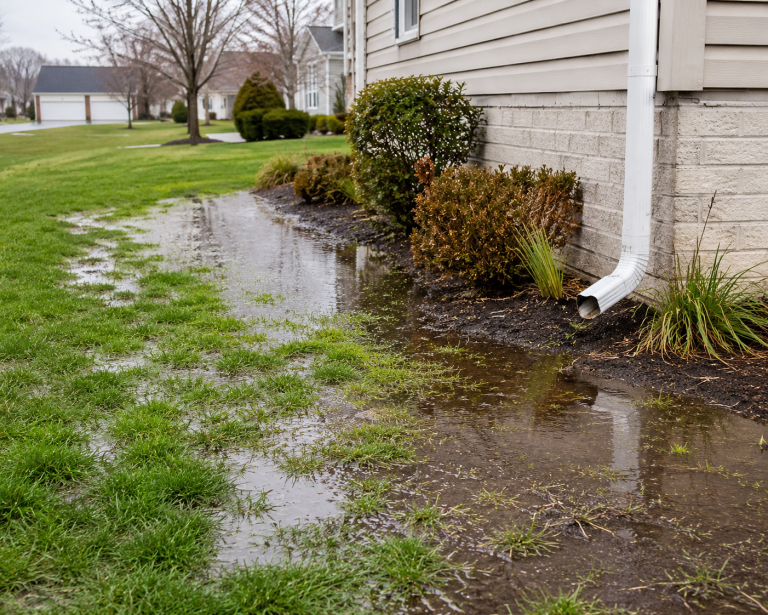
Fall drainage problems Michigan properties commonly show
- Water remains on the lawn long after rainfall ends.
- Downspouts empty beside the foundation or into saturated beds.
- Mulch and soil wash onto patios, walks or driveways.
- Lawn areas feel soft, muddy or unstable underfoot.
- Water collects near basement walls, window wells or steps.
- Drainage inlets are covered by leaves and debris.
- Low spots develop where soil or pavers have settled.
Take photos during and after rainfall. Water patterns can disappear before a contractor arrives, and photos help show where runoff begins, how it travels and how long it remains.
Why drainage problems can worsen during winter
Saturated soil can freeze, expand and shift. Repeated freeze-thaw cycles may affect pavers, steps, retaining features and soil around plant roots. Water that crosses a walkway can become an ice hazard. Poorly drained beds may also expose plants to root stress before spring.
Leaves create another problem when they cover catch basins, channel drains or low outlet points. A drain that worked during summer may appear ineffective once fall debris blocks the opening.
What causes fall drainage trouble?
Common causes include improper grading, compacted soil, heavy clay, short downspout extensions, blocked drains and settled landscape areas. New patios, additions or neighboring improvements can also change how water moves across a property.
Michigan State University explains that clay and clay-loam soils accept water more slowly than sandy soils. Small depressions may hold water until the surface can absorb it. That is why adding a drain without understanding the grade and soil does not solve every problem.
Possible landscape drainage solutions
The correct solution depends on where the water comes from and where it can be directed safely. A site evaluation may lead to one or more of the following:
- Correcting surface grades and low spots
- Extending or redirecting downspouts
- Installing catch basins or channel drains
- Using a French drain where site conditions support it
- Creating a swale to guide surface runoff
- Adding a properly designed rain garden
- Repairing settled patios, walks or edging
Water should not simply be moved onto a neighboring property or toward another structure. Andy’s landscape build services coordinate grading and drainage with the rest of the property.
What homeowners can check before the appointment
Walk the property after a steady rain and mark each area where water collects. Check whether downspout extensions remain connected and whether leaves cover visible drains. Avoid digging until underground utilities and the broader drainage path are understood.
Share any history of basement moisture, sump-pump activity, recent construction or landscaping changes. These details help the contractor determine whether the concern is isolated to one low spot or connected to a larger grading problem.
Frequently asked questions
How long is standing water normal after rain?
Brief puddling during a major storm can occur. Water that remains for an extended period or appears after ordinary rain deserves evaluation.
Can leaves block landscape drainage?
Yes. Leaves can cover surface drains, fill channels and redirect runoff toward unwanted areas.
Is fall too late for drainage work?
Not always. Timing depends on soil, weather, access and project scope. An evaluation can still identify the right next step.
Schedule a drainage evaluation
If fall rain reveals standing water or erosion, contact Andy’s Landscape Services before winter. Call (248) 837-0683 or request a Southeast Michigan landscape consultation.